Studies in World Christianity 29.3

Theological Negotiations in World Christianity

In the last issue, Studies in World Christianity highlighted several papers presented at the 2022 annual conference of the Yale–Edinburgh Group on World Christianity and the History of Mission. The journal took stock of three decades since the group’s first meeting in 1992, which has since been instrumental in ushering into existence the field of ‘World Christianity’. As was noted in that issue’s editorial, this new academic endeavour had at its origins a postcolonial posture which moved away from a Christendom paradigm of expansion and conquest towards a new paradigm of indigenous initiative and Christianity’s polycentric and multicultural manifestations. Hence, World Christianity is not a shorthand for idiosyncratic expressions of Christianity ‘out there’, as is often (mis)understood. Rather, it is the dynamic nature of a worldwide religion that experiences encounter and contestation, continuity and discontinuity, growth and decline.

Continue reading
Walls-Bediako Memorial Article: Call for Papers

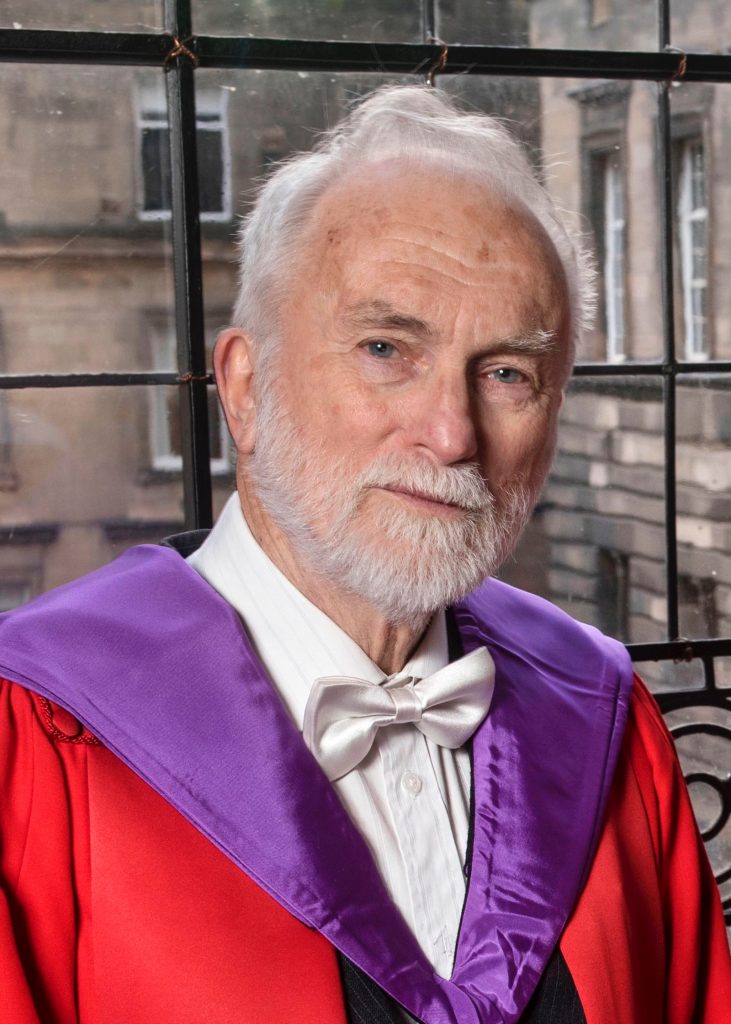
Studies in World Christianity is pleased to announce an open call for contributions to be considered as the Walls-Bediako Memorial Article—in memory of Andrew F. Walls and Kwame Bediako. The article will be featured in an issue of Studies in World Christianity and published as Gold Open Access, with the normal £1,000 Article Processing Charge waived. This will make the article freely accessible online, with extra publicity from Studies in World Christianity and Edinburgh University Press, and heighten the visibility of the author and their scholarship. Given the important place of language in the works of Walls and Bediako, if the author’s mother tongue is not English, we hope to link the published article to a mother-tongue version provided by the author on the Edinburgh University Press website.

Continue reading

Studies in World Christianity 29.2

World Christianity: Retrospect and Prospect

The academic field of World Christianity, as we know it today, owes no small debt to the Yale–Edinburgh Group on World Christianity and the History of Mission (formerly known as the Yale–Edinburgh Group in the History of Missions and World Christianity). The term ‘World Christianity’ itself has much earlier vintage. It arose from within the ecumenical movement of the first half of the twentieth century and, as such, reflected the twin imperatives of unity and mission. However, the term fell out of use until the 1990s. It was at the inaugural Yale–Edinburgh Conference in 1992 when the term ‘World Christianity’ was again deployed, this time as the conference theme, ‘From Christendom to World Christianity’. That first meeting was held on the 500th anniversary of Columbus’ arrival in America. As Dana Robert recalls, it signified ‘a postcolonial stance of moving beyond European Christendom of the old [Kenneth Scott] Latourette approach to mission history’ that focused on the geographic expansion of Christianity, ‘to that of indigenous initiative and Christianity as a multicultural religion not tied to one hemisphere’. Started by former colleagues Andrew F. Walls and Lamin Sanneh, holding meetings at their respective institutions, the Yale–Edinburgh Group became a seminal discursive space for a postcolonial approach to mission history. It also brought to light the importance of documenting and preserving historical archival collections associated with Christianity as a worldwide phenomenon.

Continue reading

Studies in World Christianity 29.1

Women in World Christianity: Navigating Identities

Edited by Nuam Hatzaw and Jessie Fubara-Manuel

Leading Ghanaian theologian Mercy Amba Oduyoye describes theology without the inclusion of women as a one-winged bird – hindered and unable to soar to its full potential. In her opening address at the inaugural meeting of the Circle of Concerned African Women Theologians (the Circle) in 1989, she contended that African theology needs to pay proper attention to women’s issues, experiences and theological reflections in order that it might be a two-winged theology that can take full flight. Oduyoye’s comments highlighted the pervasive omission of women’s voices within religious institutions and theological and religious studies literature. Despite women’s important and pivotal roles in these arenas, their contributions, perspectives and needs have gone consistently underplayed, or been otherwise dismissed.

Continue reading