
The Centre for the Study of World Christianity offers supervised research degrees at the Masters and PhD levels. For more information, see the programmes we offer.
The Centre attracts a diverse body of students from many different countries and religious traditions. Our students come from Cameroon, China, Ghana, India, Iran, South Korea, the Netherlands, Nigeria, Norway, the Philippines, the USA, and, of course, the UK.
Below is a list of our current PhD students. You can also peruse some of the past PhD theses produced by Centre students, across the decades.
 Kpanie Addy (Ghana) · My research examines the Catholic Church’s role in Ghanaian politics by focusing on the church’s attempts to contribute to Ghana’s transition from near-state collapse to socio-political and economic resurgence during the Rawlings era (1981-2001). My project, which uses archival documents and oral history, aims to uncover and explain the distinctive course pursued by the Catholic Church in Ghana, institutionally and through its affiliates, in response to Rawlings’s revolution and its agenda of realizing participatory democracy. Kpanie Addy (Ghana) · My research examines the Catholic Church’s role in Ghanaian politics by focusing on the church’s attempts to contribute to Ghana’s transition from near-state collapse to socio-political and economic resurgence during the Rawlings era (1981-2001). My project, which uses archival documents and oral history, aims to uncover and explain the distinctive course pursued by the Catholic Church in Ghana, institutionally and through its affiliates, in response to Rawlings’s revolution and its agenda of realizing participatory democracy. |
 Michaela Copsey (New Zealand/UK) · My research is a historical study of Evangelical Anglican women’s theological convictions, influences and missional theology in colonial Uganda and the Church Missionary Society between 1920 and 1950. Focusing on British and Ugandan women, I investigate how women conceptualised and embodied their ministerial roles within a cross-cultural context. By examining the ways women engaged in theological discourse collectively and in their private reflections, this thesis highlights women’s often-overlooked experiences of ministry and gives an account for women’s theology of mission in East Africa. Themes of missionary migration, confessional motivations and distinctly female missiological approaches will be explored. Michaela Copsey (New Zealand/UK) · My research is a historical study of Evangelical Anglican women’s theological convictions, influences and missional theology in colonial Uganda and the Church Missionary Society between 1920 and 1950. Focusing on British and Ugandan women, I investigate how women conceptualised and embodied their ministerial roles within a cross-cultural context. By examining the ways women engaged in theological discourse collectively and in their private reflections, this thesis highlights women’s often-overlooked experiences of ministry and gives an account for women’s theology of mission in East Africa. Themes of missionary migration, confessional motivations and distinctly female missiological approaches will be explored. |
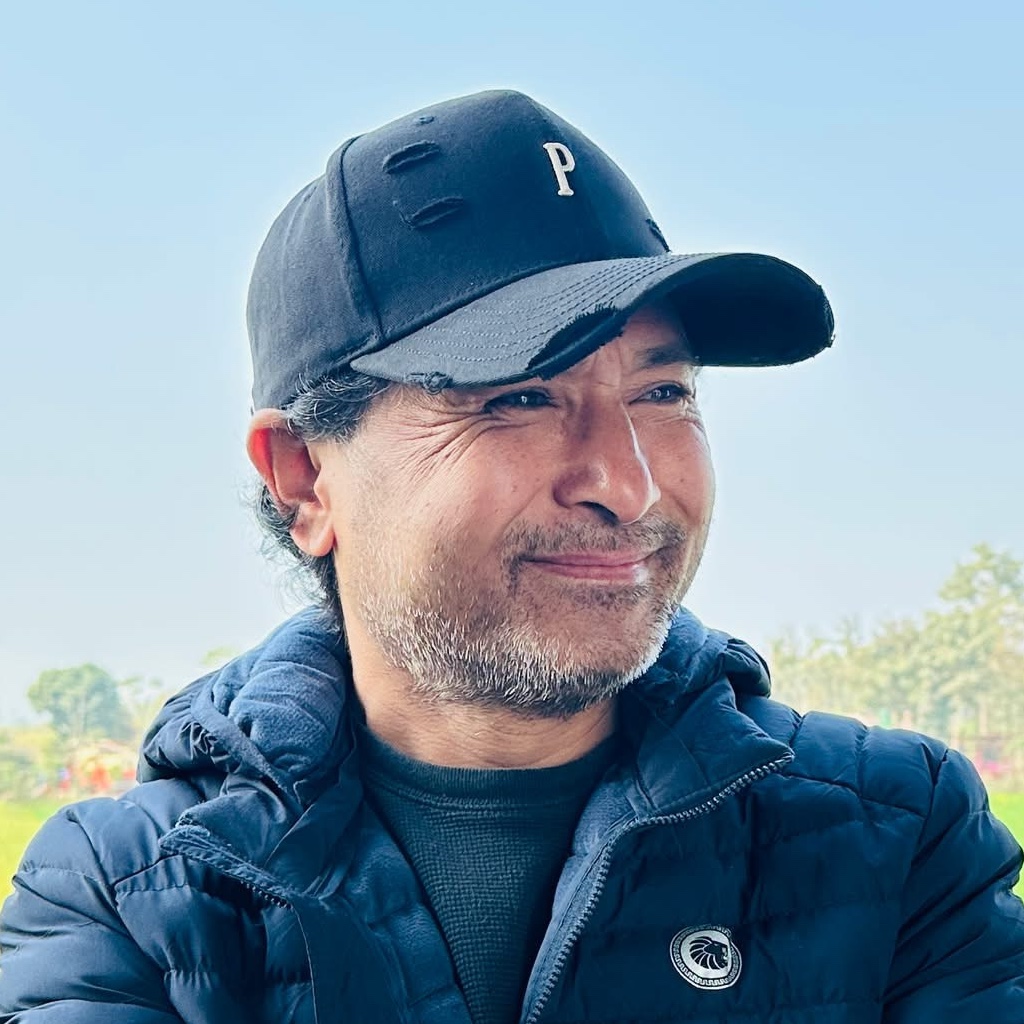 Nima R. Ghising (Nepal/USA) · My research examines how Tamang Christians in Nepal encounter, interpret, and embody Christianity in everyday life. Drawing on ethnographic fieldwork and a lived religion approach, I explore how Christian faith is negotiated within multi-faith family and community settings where shamanism, Buddhism, and Christianity coexist and interact. I explore how Christianity emerges through processes of continuity and discontinuity, giving rise to vernacular expressions of faith shaped by local cosmology, practices, and social realities. By highlighting local Christian agency, this research contributes to World Christianity scholarship by demonstrating how Christianity is creatively reimagined within indigenous cosmological categories. Nima R. Ghising (Nepal/USA) · My research examines how Tamang Christians in Nepal encounter, interpret, and embody Christianity in everyday life. Drawing on ethnographic fieldwork and a lived religion approach, I explore how Christian faith is negotiated within multi-faith family and community settings where shamanism, Buddhism, and Christianity coexist and interact. I explore how Christianity emerges through processes of continuity and discontinuity, giving rise to vernacular expressions of faith shaped by local cosmology, practices, and social realities. By highlighting local Christian agency, this research contributes to World Christianity scholarship by demonstrating how Christianity is creatively reimagined within indigenous cosmological categories. |
 Jackie Hwang (US/Taiwan) · My research explores the themes of migration, multiple belonging, and transnationalism in Chinese Christianity beyond the geopolitical boundaries of China. It focuses on the interactions between Chinese students studying in Singapore’s universities and Singaporean Chinese Christians. It seeks to demonstrate that transnational connections take shape around a familial conception, literal and figurative, thereby providing a pathway for negotiating one’s sense of belonging in migration. My integration of ethnography and theology will also examine how this familial conception contributes to an understanding of missiology and ecclesiology in transnational Chinese contexts. Jackie Hwang (US/Taiwan) · My research explores the themes of migration, multiple belonging, and transnationalism in Chinese Christianity beyond the geopolitical boundaries of China. It focuses on the interactions between Chinese students studying in Singapore’s universities and Singaporean Chinese Christians. It seeks to demonstrate that transnational connections take shape around a familial conception, literal and figurative, thereby providing a pathway for negotiating one’s sense of belonging in migration. My integration of ethnography and theology will also examine how this familial conception contributes to an understanding of missiology and ecclesiology in transnational Chinese contexts. |
 Sashi Imsong (India) · My research investigates how Christian Chepangs in Nepal negotiate their Christian faith alongside their indigenous cosmology, which is deeply rooted in close relationships with land, nature, and community. Through ethnographic fieldwork, I explore the ways in which this worldview is preserved, transformed, or challenged within the context of Christian belief and practice. With a focus on ecological concerns, my study examines how the Chepang community navigates ongoing changes in livelihood, identity, and access to natural resources. Ultimately, my research aims to provide insights into how Christianity is lived and reimagined in indigenous contexts, and how these intersections can contribute to both ecological conservation and the continuity of cultural traditions. Sashi Imsong (India) · My research investigates how Christian Chepangs in Nepal negotiate their Christian faith alongside their indigenous cosmology, which is deeply rooted in close relationships with land, nature, and community. Through ethnographic fieldwork, I explore the ways in which this worldview is preserved, transformed, or challenged within the context of Christian belief and practice. With a focus on ecological concerns, my study examines how the Chepang community navigates ongoing changes in livelihood, identity, and access to natural resources. Ultimately, my research aims to provide insights into how Christianity is lived and reimagined in indigenous contexts, and how these intersections can contribute to both ecological conservation and the continuity of cultural traditions. |
 Jerusha Lieow (Malaysia) · My research engages both theologians and biblical scholars on the topic of food offered to idols and its contrast to the Eucharist as addressed by Paul in 1 Corinthians 8-10. I explore an approximation to the original context through the lens of present-day Chinese practices from my cultural heritage. The project aims to test commonly held assumptions about Greco-Roman food offerings in order to shed more light on the perennial debate: “Is idol-food permissible for Christians according to Paul, and why?” I argue that the above text is better understood when recognising the agency of demons (daimonia), an aspect of Pauline theology that has often been understated by present scholarship. Jerusha Lieow (Malaysia) · My research engages both theologians and biblical scholars on the topic of food offered to idols and its contrast to the Eucharist as addressed by Paul in 1 Corinthians 8-10. I explore an approximation to the original context through the lens of present-day Chinese practices from my cultural heritage. The project aims to test commonly held assumptions about Greco-Roman food offerings in order to shed more light on the perennial debate: “Is idol-food permissible for Christians according to Paul, and why?” I argue that the above text is better understood when recognising the agency of demons (daimonia), an aspect of Pauline theology that has often been understated by present scholarship. |
 John Munayer (Palestine) · My research project explores how everyday Christians construct and express their political theology. Using the ancient indigenous ritual of Sabt al-Nour (Holy Fire) as a case study, the research employs ethnographic methods, participant observation and interviews, to uncover grassroots theological meaning-making. By grounding Palestinian theology in lived experience and local ritual, this study contributes to the decolonisation of Palestinian theology and offers insights relevant to the broader field of World Christianity. John Munayer (Palestine) · My research project explores how everyday Christians construct and express their political theology. Using the ancient indigenous ritual of Sabt al-Nour (Holy Fire) as a case study, the research employs ethnographic methods, participant observation and interviews, to uncover grassroots theological meaning-making. By grounding Palestinian theology in lived experience and local ritual, this study contributes to the decolonisation of Palestinian theology and offers insights relevant to the broader field of World Christianity. |
 Jeff Peterson (USA) · My project is a three-decade history (1965-1995) of theological engagement among the Crow people of Montana (USA) and a visionary cohort of Catholic missionaries who arrived following Vatican II (1962-1965). Because of the Crows’ location, collective identity, unique history and political relationships, the missionaries found an inviting place to attempt to carry out the ideals of Vatican II. This study will contribute to discussions concerning inculturation, syncretism, and multiple-religious belonging, and will also demonstrate how this particular engagement was part of broader networks of influence and understanding. Jeff Peterson (USA) · My project is a three-decade history (1965-1995) of theological engagement among the Crow people of Montana (USA) and a visionary cohort of Catholic missionaries who arrived following Vatican II (1962-1965). Because of the Crows’ location, collective identity, unique history and political relationships, the missionaries found an inviting place to attempt to carry out the ideals of Vatican II. This study will contribute to discussions concerning inculturation, syncretism, and multiple-religious belonging, and will also demonstrate how this particular engagement was part of broader networks of influence and understanding. |
 Biao Zhu (China/Canada) · My research examines the ecclesiological complexity of the Protestant Church in mainland China by identifying the distinctive Chinese ecclesiologies of four Chinese Protestant ecclesiological movements (namely, Little Flock, traditional house church, Three-Self Patriotic Movement, and urban house church). It shows how ecclesiological differences address different contextual needs. Furthermore, it develops an ecclesiological framework to assess the historical contextual requirements and the contemporary challenges of these Chinese ecclesiologies, and hopes to prompt developments among each movement. Biao Zhu (China/Canada) · My research examines the ecclesiological complexity of the Protestant Church in mainland China by identifying the distinctive Chinese ecclesiologies of four Chinese Protestant ecclesiological movements (namely, Little Flock, traditional house church, Three-Self Patriotic Movement, and urban house church). It shows how ecclesiological differences address different contextual needs. Furthermore, it develops an ecclesiological framework to assess the historical contextual requirements and the contemporary challenges of these Chinese ecclesiologies, and hopes to prompt developments among each movement. |
 Alison Zilversmit (UK) · My project explores how the Anglican British mission organization United Society Partners in the Gospel incorporated constructions of socio-economic “development” and “aid” into their missiologies in the mid-20th century. I utilize an intellectual historical approach informed by theological and sociological considerations to analyze the USPG archives particularly within the global context of decolonization. I ask how this transition was shaped by and shaped global power-dynamics between this global northern Anglican agency and its global southern Anglican interlocutors, and whether development may be a cross-culturally informed category in USPG mission. Alison Zilversmit (UK) · My project explores how the Anglican British mission organization United Society Partners in the Gospel incorporated constructions of socio-economic “development” and “aid” into their missiologies in the mid-20th century. I utilize an intellectual historical approach informed by theological and sociological considerations to analyze the USPG archives particularly within the global context of decolonization. I ask how this transition was shaped by and shaped global power-dynamics between this global northern Anglican agency and its global southern Anglican interlocutors, and whether development may be a cross-culturally informed category in USPG mission. |