
Making Sense of the ‘Other’
 The four articles in this issue of Studies in World Christianity reflect on various aspects of the theme of how Christians in different non-European contexts over a wide historical period have approached and endeavoured to make sense of those who are, or at least appear to be, different from them. As Ankur Barua observes in his article on Christian theological responses to the alterity of the Hindu majority in India, the question ‘precisely how other is the other?’ is not a contemporary invention of postmodern theory but a theological- philosophical puzzle that has confronted Christians throughout the history of the Church. Christian theology is premised on the foundation of the fundamental created unity of humanity – God’s love extends to all human beings without differentiation as those who all bear the image of God, and the scope of salvation in Christ must be similarly unlimited. Yet this universalism of Christian doctrine is always held in some kind of tension with the inescapable biblical antitheses between light and darkness, the Church and the world, the redeemed and the lost. The often radically divergent ways in which different groups of Christians have expressed and maintained – or occasionally even ignored – this tension forms much of the warp and woof of Christian history. Continue reading

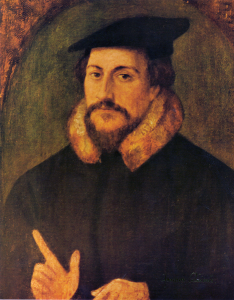 There is a growing recognition by the media and by scholars that Calvinism is growing in China these days.