Reflections on Yale-Edinburgh 2026

Written by Centre PhD student, Kpanie Addy, SJ.
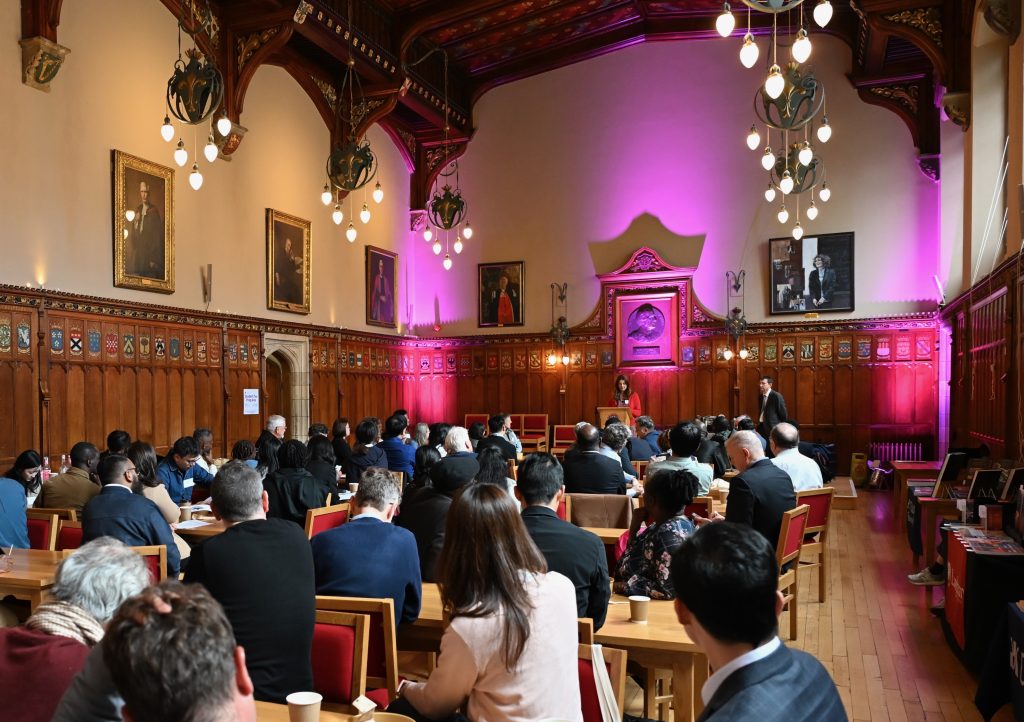
Professor Emma Wild-Wood (Centre Co-Director) and Professor Jeremy Carette (Head of School) welcoming delegates to Yale-Edinburgh 2026.

With the theme “Popular, Folk, Grassroots and Pop Culture in World Christianity and the History of Mission,” the 2026 Yale-Edinburgh Conference promised an intellectually stimulating encounter. Held at New College, University of Edinburgh, from 10th to 12th June 2026, it more than met that expectation. Not many conferences witness the eruption of rhythmic sounds and harmonious melodies, with bodies gently gyrating to depict the performative aspects of religious practices, all of which align with the quest to advance academic inquiry. This distinctive feature of the 2026 Y-E Conference pointed to the richness of the field of World Christianity and the need to delve deeper into how religion is evoked, religious soundscapes, and the theatre of Christian ritual. The conference began with a gracious welcome from Professor Jeremy Carette, Head of the School of Divinity, followed by a preview by Professor Emma Wild-Wood, CSWC co-director. The eighty-five participants were then ushered into three days of thought-provoking scholarly exchanges, consisting of forty-eight in-person presentations and two hybrid panels, each comprising three presentations, held in Hong Kong and Nairobi. 

Presentations addressed a wide range of themes, including World Christianity and Music; Popular Culture and Christianity in the Digital Age; Mediating Christianity in Popular Culture; Christian Popular Culture, Social Justice and Liberation. Papers were grouped into panels to foster conversations across geographic specialisations, enriching presenters’ insights through regional, thematic, and disciplinary perspectives. Notwithstanding the emergent hybridity, traditional themes in world Christianity, such as the translation principle, resonated across many papers while also introducing novelty to these enduring motifs. 

Continue reading

Grassroots and Indigenous Digital Faith-Based Activism Colloquium—Call for Papers

Digital technology is changing the world. In response to global challenges, diverse grassroots faith-based organisations, indigenous or otherwise, are using digital technologies to activate for justice. These activists draw on contextual wisdom and religious resources and express their activist commitments publicly in social media forums. Some of these organisations describe themselves as indigenous. Others find terms like grassroots more helpful. Academic analysis of these local digital activisms provides ways to learn with and from online theologies that are immediate, provisional and contextual.

Continue reading

Studies in World Christianity 28.1

Oral, Print and Digital Cultures

A few years ago, Andrew Walls told me that he had once hoped to become a missionary to China. However, with the rise of the Chinese communist revolution, those plans were dashed, and he eventually made his way to Sierra Leone in 1957, followed by Nigeria in 1962. One wonders how the study of World Christianity would have been different if the doyen of the academic field spent his formative missionary years in China instead of Africa. Would he have had the same epiphany in Beijing or Shanghai or Wenzhou that he was ‘actually living in a second-century church’? When considering Confucianism or Daoism, would he likewise speak of the place of ‘primal religions’ in shaping the consciousness of another faith, be it Christianity or Buddhism? Both are undoubtedly possibilities. But perhaps, in this parallel universe, the area less likely to have developed would have been his recognition of the importance of oral cultures – a pervasive characteristic in his beloved Africa, but scantly recognised in China.

Continue reading

What does Jerusalem have to do with the Internet? #YaleEdin2021

On 22 June 2021, the 2021 Yale-Edinburgh conference commenced with the keynote address by Dr Alexander Chow, entitled: What does Jerusalem have to do with the Internet? World Christianity and Digital Culture. We are pleased to make the recording of this keynote publicly available.

If you are unable to access the video above from YouTube, you can also try watching it from the University of Edinburgh’s Media Hopper service.