Reflections on Yale-Edinburgh 2026

Written by Centre PhD student, Kpanie Addy, SJ.
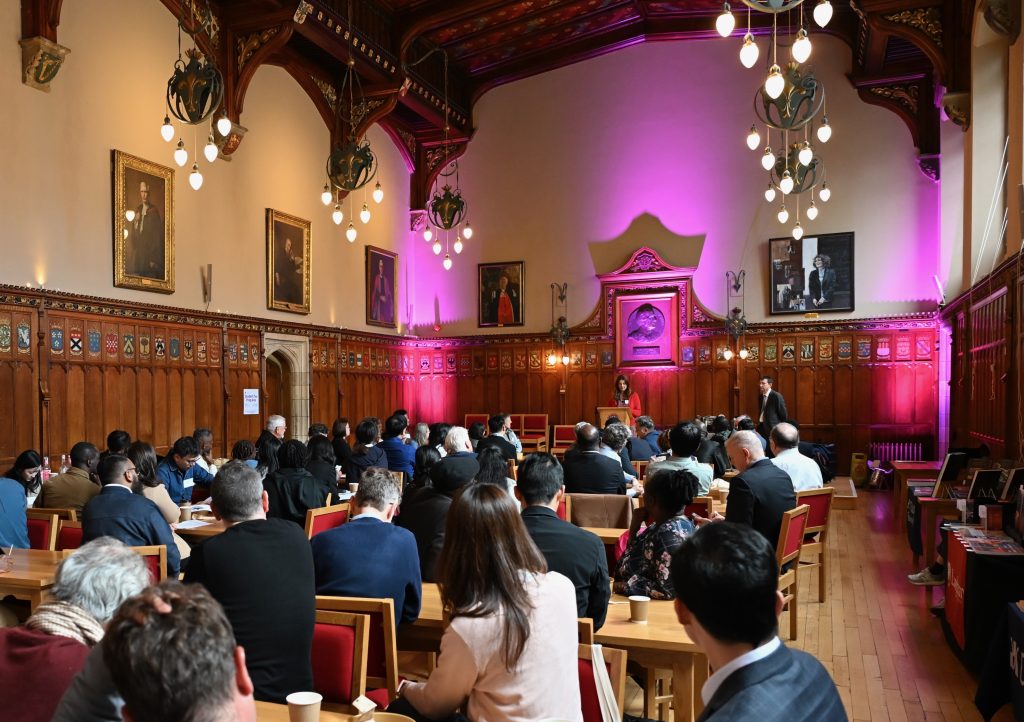
Professor Emma Wild-Wood (Centre Co-Director) and Professor Jeremy Carette (Head of School) welcoming delegates to Yale-Edinburgh 2026.

With the theme “Popular, Folk, Grassroots and Pop Culture in World Christianity and the History of Mission,” the 2026 Yale-Edinburgh Conference promised an intellectually stimulating encounter. Held at New College, University of Edinburgh, from 10th to 12th June 2026, it more than met that expectation. Not many conferences witness the eruption of rhythmic sounds and harmonious melodies, with bodies gently gyrating to depict the performative aspects of religious practices, all of which align with the quest to advance academic inquiry. This distinctive feature of the 2026 Y-E Conference pointed to the richness of the field of World Christianity and the need to delve deeper into how religion is evoked, religious soundscapes, and the theatre of Christian ritual. The conference began with a gracious welcome from Professor Jeremy Carette, Head of the School of Divinity, followed by a preview by Professor Emma Wild-Wood, CSWC co-director. The eighty-five participants were then ushered into three days of thought-provoking scholarly exchanges, consisting of forty-eight in-person presentations and two hybrid panels, each comprising three presentations, held in Hong Kong and Nairobi. 

Presentations addressed a wide range of themes, including World Christianity and Music; Popular Culture and Christianity in the Digital Age; Mediating Christianity in Popular Culture; Christian Popular Culture, Social Justice and Liberation. Papers were grouped into panels to foster conversations across geographic specialisations, enriching presenters’ insights through regional, thematic, and disciplinary perspectives. Notwithstanding the emergent hybridity, traditional themes in world Christianity, such as the translation principle, resonated across many papers while also introducing novelty to these enduring motifs. 

Continue reading

Yale-Edinburgh 2026 – Call for Papers

Popular, Folk, Grassroots and Pop Culture
in World Christianity and the History of Mission
10–12 June 2026 ‧ New College, University of Edinburgh ‧ #YaleEdin2026
Yale-Edinburgh Conference on World Christianity and the History of Mission
Deadline for Proposals: 1 February 2026 (Now closed!)

Christian communities, individuals, and institutions have always grappled with grassroots cultural expressions that surround them in different historical and social settings. This relationship has been riven with ambiguities. Songs, plays, and literature, print, radio, television, and the internet are deemed to edify or to scandalise, to propagate the Gospel or to profane it, to promote Christian virtues or to reject them, to encourage devotion or to deaden Christian sentiments. Missionaries have drawn upon familiar forms for hymns or folk traditions for liturgy. They have also eschewed popular songs and myths as antithetical to the Gospel. Majority World Christians simultaneously cultivate a ‘world-breaking’ attitude towards popular culture, casting off local traditions and customs as demonic, and a ‘world-making’ posture that positively engages local ontologies and folk cultures, like the Orthodox Anastenaria in which icons are displayed at festivals.

Continue reading

Imagining a Church of Wakanda in Marvel’s Black Panther

Marvel’s Black Panther movie portrays the interesting idea of an African society largely untouched by European colonialism. Introduced to comic-book readers in the 1960s amidst European decolonisation and the US civil rights movement, the fictional Kingdom of Wakanda’s success in resisting forces that would exploit its people and resources was compelling. Movie goers today, when popular depictions portray a war-torn and poverty-stricken continent, find the portrayal of a free African society at the forefront of technological advancement no less compelling. As a scholar of African Christianity and colonialism, the idea of Christianity in this African culture unaffected by colonial influences intrigues me. What would such a Christianity look like? Continue reading